
For decades, the journey of an email sent from Lagos to Accra was often a scenic—and expensive—one. Data would travel under the Atlantic, land in London or Marseille, and then double back to West Africa. This phenomenon, known as “tromboning,” made the African internet slow, fragile, and prohibitively costly.
Today, that narrative is shifting. As of early 2026, Africa is moving from an “infrastructure-heavy” phase to an “execution” phase. At the heart of this transformation are Internet Exchange Points (IXPs)—the physical hubs where local networks connect to exchange traffic directly.
The Anatomy of an Exchange
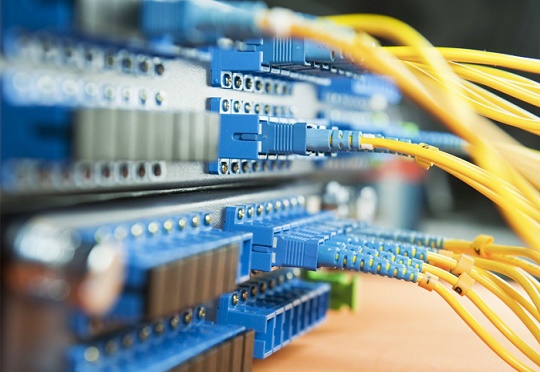
An IXP acts like a central transit station. Instead of every bus (service provider) driving to a distant city to swap passengers, they all meet at a local terminal.
By keeping traffic local, IXPs provide three critical benefits:
- Lower Latency: Round-trip times for data have plummeted from 200-600ms (routing through Europe) to a crisp 2-10ms locally.
- Cost Savings: ISPs save millions in international transit fees. In Nigeria and Kenya alone, IXPs have saved operators over $1 million per year.+1
- Resilience: If an international subsea cable is cut, local services—like banking, e-government, and domestic messaging—stay online because the traffic never needs to leave the country.
A Tale of Two Tiers: The Leaders and the Emerging
The growth of IXPs in Africa is no longer uniform; it is accelerating into distinct clusters.
The Heavyweights
South Africa, Nigeria, and Kenya remain the “Big Three” of African peering.
- South Africa: Home to NAPAfrica, the continent’s most influential hub. As of January 2026, NAPAfrica Johannesburg hosts over 540 members, acting as a regional magnet for international giants like Google, Netflix, and Microsoft.
- Nigeria: The Internet Exchange Point of Nigeria (IXPN) has expanded into a multi-city powerhouse. With over 140 members across Lagos, Abuja, and Kano, it now localizes nearly 70% of its domestic traffic, up from just 30% a decade ago.
The Rising Tide
Under the “80/20” vision—a goal to keep 80% of African traffic within the continent—smaller markets are making aggressive gains:
- Rwanda & Malawi: Countries that once relied entirely on neighbors are now hosting their own vibrant exchanges (like the recently launched LLIX in Lilongwe).
- The “Zero-IXP” Gap: A major push is underway to install IXPs in the final remaining countries without them, including Senegal, Burkina Faso, and Burundi, through initiatives like the Coalition for Digital Africa.
Why 2026 is Different: The Content Shift
The early growth of IXPs was about basic connectivity. The current growth is about content.
In 2026, the focus has shifted inland. As international subsea cables (like Equiano and 2Africa) have reached their full operational capacity, the bottleneck has moved to the “middle mile.” We are seeing:+1
- Edge Computing: Data centers are being built right next to IXPs to host AI workloads and video streaming caches locally.
- Sovereignty: Governments are increasingly mandating that “critical national data” (health records, tax info) be exchanged only through domestic IXPs to ensure security.
The Road Ahead
While the progress is historic, challenges remain. High cross-border terrestrial fiber costs still make it cheaper, in some cases, to send data to Europe than to a neighboring landlocked country.
However, the momentum is undeniable. With the African IXP Association (AFIX) fostering collaboration and more local capital flowing into “bankable” infrastructure projects, the “trombone” is finally being silenced. Africa is no longer just consuming the global internet; it is building its own.
About Author




More Stories
Bridging the Digital Divide: Nigeria’s First Community-Centred Connectivity Bootcamp Kicks Off in Abuja.
DRC Faces Digital Education Challenge as AI Ambitions Meet Infrastructure Gaps.
Madagascar Overhauls Cybercrime Laws, Signs UN Convention to Strengthen Digital Security.