
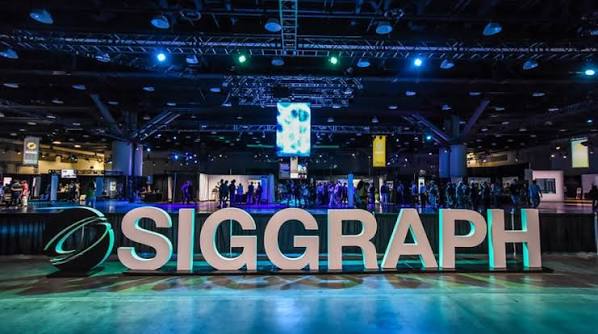
LOS ANGELES — At the SIGGRAPH conference, NVIDIA showcased major advancements across real-time graphics, AI-driven physical simulation, and physical AI, highlighting how generative models and spatial computing are reshaping creative industries and robotics.
DLSS 5 Introduces Generative Realism to Real-Time Graphics
NVIDIA presented DLSS 5, marking a transition from traditional reconstruction to generative scene enrichment. Building on the path-tracing foundations of DLSS 4, DLSS 5 uses a one-step pixel-space diffusion transformer model to enhance real-time rendering on a frame-by-frame basis.
Key Technical Breakthroughs
- Narrative & Artistic Intent Preservation: By utilizing engine buffers (such as albedos, surface normals, and lighting data), the model enriches visual details—including subsurface scattering, foliage light transmission, and ambient occlusion—without altering character features or scene geometry.
- Temporal Streaming & Low Latency: Operates causally on a frame-in, frame-out basis using motion vectors to maintain temporal coherence without requiring look-ahead frames.
- Fine-Grained Developer Control: Offers global structure/tone intensity controls, automated semantic masking, and engine-side object isolation to give creative directors precise control over visual outputs.
“Simulation defines the world, generation enriches its appearance, and artists direct the outcome.”
— Edward Liu, Director of Applied Deep Learning Research at NVIDIA
AI-Accelerated Physics Simulation
NVIDIA demonstrated how trained neural operators accelerate complex fluid dynamics and climate simulations.
- Climate & Weather Modeling: The presentation highlighted planetary-scale climate simulations running on 50-billion-cell grids across more than 20,000 GPUs. AI models trained on physics data (such as ERA5 reanalysis datasets) can predict global weather patterns in seconds rather than days while matching or exceeding the accuracy of traditional numerical solvers.
- Aerodynamic Engineering: Transformer-based physics surrogate models compressed 200 terabytes of high-fidelity aerodynamic data down to a 200 MB model checkpoint. Running on a single workstation GPU, these models predict complex airflow around unseen aircraft geometries within 1–2% accuracy at over 10,000 times the speed of traditional CFD simulations.
NVIDIA Cosmos: Open Foundation Models for Physical AI
To address data scaling limits in robotics and autonomous systems, NVIDIA detailed NVIDIA Cosmos, an open foundation model framework designed for physical AI.
+-----------------------------------------------------------------------+
|                         NVIDIA COSMOS ARCHITECTURE                    |
+------------------------------------+----------------------------------+
|      Auto-Regressive Tower         |        Diffusion Tower           |
|  - Vision & Text Token Inputs      |  - Vision, Audio & Action Tokens |
|  - Causal Cross-Attention          |  - Global Multimodal Attention   |
|  - Reasoning & Scene Description   |  - Physics-Aware Generation      |
+------------------------------------+----------------------------------+
Key Announcements
- Mixture-of-Transformers Architecture: Unifies scene understanding, temporal prediction, physical simulation, and action generation using shared multimodal representations.
- Unified Action Vocabulary: Standardizes diverse robot embodiments (autonomous vehicles, single-arm manipulators, humanoids) into pure geometric primitives—such as ego pose, vector poses, and grasper states.
- Cosmos 3 Model Family:
- Cosmos 3 Super: Frontier-level fidelity model for high-accuracy simulation pipeline generation.
- Cosmos 3 Nano (16B): Intermediate model optimized for AV and physical AI teams.
- Cosmos 3 (4B): Compact variant engineered for real-time, low-latency deployment on edge computing hardware like DRIVE Thor and Jetson platforms.
- Cosmos Dreams: A neural closed-loop simulator for autonomous vehicles capable of generating multi-sensor photorealistic camera feeds conditioned on real-time vehicle control inputs. Demonstrated live at the event, the simulation ran interactively on a single workstation GPU.
Release Schedule
DLSS 5 and the Cosmos open model repository (including post-training scripts and framework tools) are scheduled for general release.
About Author





More Stories
Bridging the Digital Divide: Nigeria’s First Community-Centred Connectivity Bootcamp Kicks Off in Abuja.
DRC Faces Digital Education Challenge as AI Ambitions Meet Infrastructure Gaps.
Madagascar Overhauls Cybercrime Laws, Signs UN Convention to Strengthen Digital Security.