
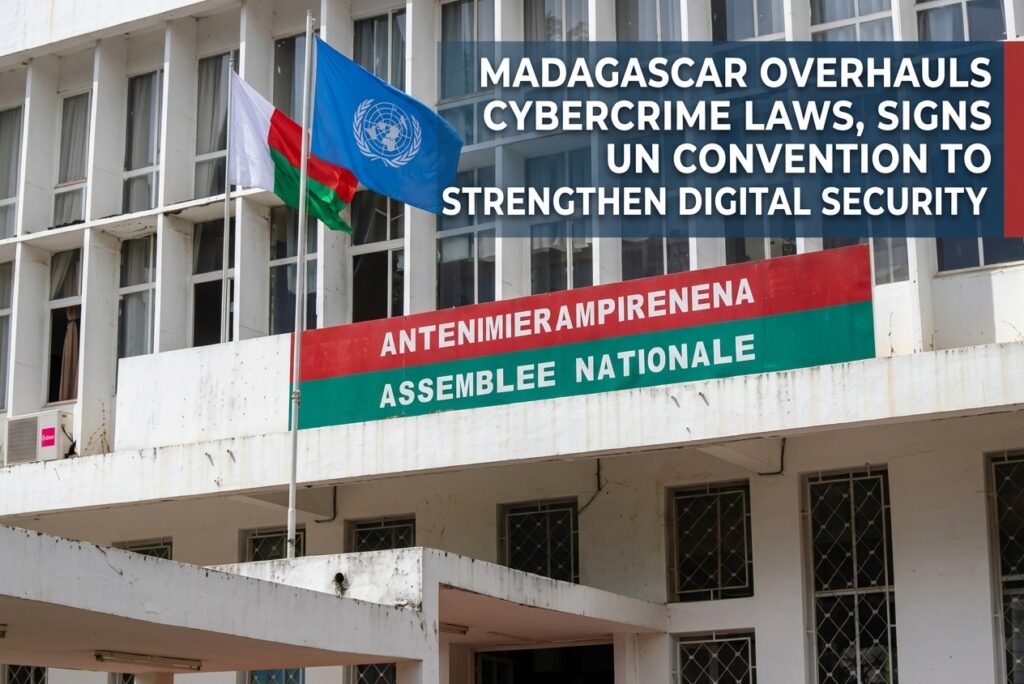
ANTANANARIVO — In a major step toward modernizing its national security infrastructure, Madagascar is overhauling its legislative framework on cybercrime and aligning its judicial systems with global digital enforcement standards.
The reform push reflects the island nation’s commitment to tackling cross-border cyber threats, protecting digital infrastructure, and facilitating seamless cooperation with international law enforcement authorities.
Updating a Decade-Old Legal Framework
Madagascar’s domestic cybercrime legal regime was originally established under Law No. 2014-006 (later amended by Law No. 2016-031). While the decade-old statutes criminalized foundational digital offenses—such as unauthorized system access, data interference, and online fraud—they were increasingly outpaced by modern threat vectors, sophisticated online scams, and complex cross-border cyberattacks.
Under the updated initiative, the government is working to modernize definitions of digital offenses, enhance enforcement powers, and strengthen data protection obligations for telecommunications operators and internet service providers operating across the island.
This legislative overhaul follows broader regulatory strides in recent years, including the ratification of the African Union’s Malabo Convention on Cyber Security and Personal Data Protection and operationalizing the Commission Malagasy sur l’Informatique et des Libertés (CMIL), the country’s national data privacy authority.
Aligning with the UN Cybercrime Convention
A centerpiece of Madagascar’s new digital strategy is its commitment to international legal mechanisms. The nation has formally joined the multilateral push surrounding the United Nations Convention Against Cybercrime—the global treaty adopted by the UN General Assembly to establish standardized tools for cross-border digital policing.
By aligning its national legislation with the UN treaty, Madagascar aims to streamline mutual legal assistance (MLA) processes. This alignment will make it easier for local prosecutors to request and share electronic evidence, trace criminal financial flows, and extradite cybercriminals operating across international borders.
Balancing Enforcement and Digital Rights
While government officials emphasize that stronger laws are crucial to safeguarding Madagascar’s expanding digital economy and critical infrastructure, human rights advocates and international observers note that implementation must be handled with care.
Critics of broad cybercrime statutes caution that expanded state surveillance capabilities and vaguely defined content regulations must be balanced with strict judicial oversight to protect personal privacy, civil liberties, and press freedoms.
Despite these challenges, Madagascar’s systemic legislative update underscores a clear policy shift: transitioning from reactive local policing to a structured, modern framework capable of defending the nation in an increasingly interconnected global threat landscape.
About Author




More Stories
ICANN87 Kicks Off in Bali: At-Large Community Calls for Global End-User Voices Ahead of ATLAS IV.
Bridging the Digital Divide: Nigeria’s First Community-Centred Connectivity Bootcamp Kicks Off in Abuja.
DRC Faces Digital Education Challenge as AI Ambitions Meet Infrastructure Gaps.